Drone Program
Overview
The Delta Police Department (DPD) was one of the first police departments in British Columbia to operationalize a drone program in Patrol and has continued to expand its use of drone technology to support police operations and public safety.
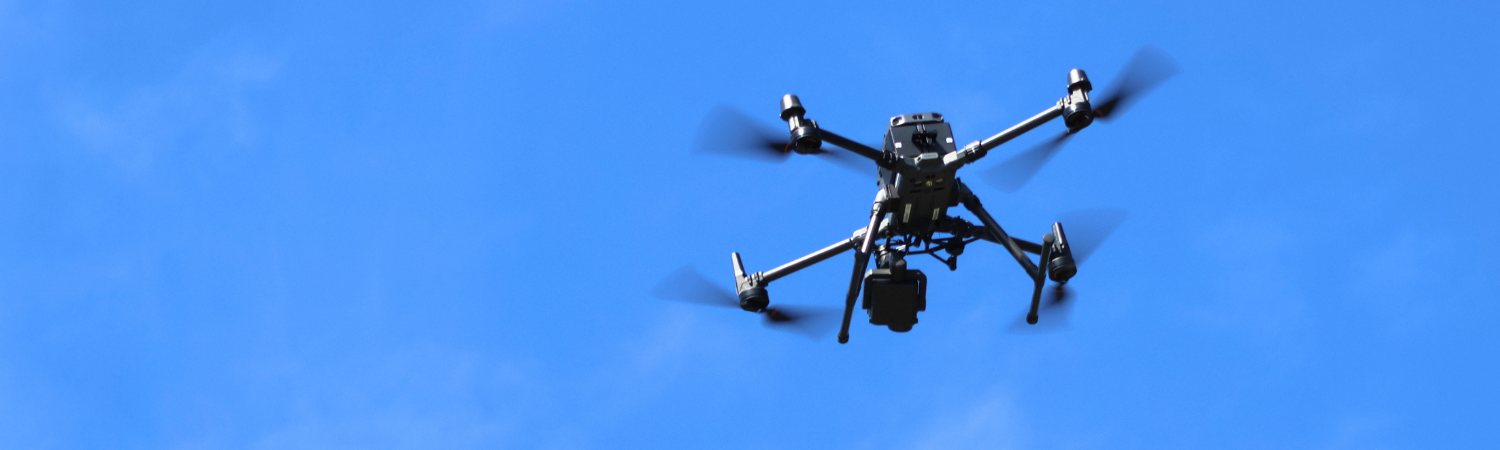
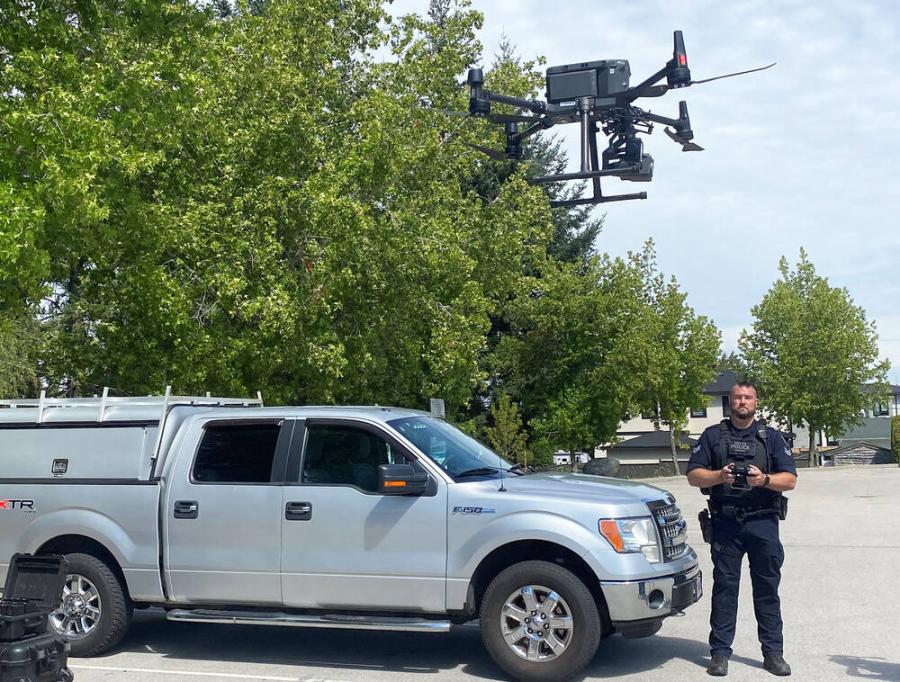
DPD uses remotely piloted aircraft systems, commonly referred to as drones, to assist with calls for service, investigations, search and rescue, emergency response and other operational needs.
DPD’s use of drones is governed by privacy legislation, federal aviation requirements and departmental policy.
Drones provide officers with a timely aerial perspective, helping them assess incidents, locate people, document scenes and make informed operational decisions.
Why DPD Uses Drones
Drones support effective policing and public safety by helping to:
- Provide real-time situational awareness during calls for service and critical incidents
- Support investigations and evidence collection
- Locate missing or vulnerable people
- Assist with search and rescue operations
- Enhance officer and public safety by assessing scenes from the air
- Support disaster and emergency response
- Document collision, crime and other complex scenes
- Assist with public order operations and safety planning
When Drones May Be Used
In alignment with policy, drones may be used in support of investigations, search and rescue, public order operations, disaster or emergency response, training and approved municipal infrastructure assessment and safety planning.
A drone does not replace responding officers. It provides additional information that may assist officers and other emergency responders on the ground.
Additional information governing usage can be found in DPD policy.
Drone as First Responder
DPD launched its Drone as First Responder (DFR) program in 2024 as an extension of its existing drone program.
DFR allows a trained operator to remotely launch a drone from a secure docking station in response to certain calls for service. The drone may arrive before officers and provide real-time aerial situational awareness, helping responding officers understand what is occurring, identify potential risks and determine the most appropriate response.
The DFR drone’s camera does not record while travelling to the response area. Recording begins only when the operator determines that there is evidentiary value.
Privacy and Responsible Use
DPD’s use of drones is governed by privacy legislation, Departmental Policy DP53 and applicable aviation requirements.
When a drone is used to conduct an investigative search, officers must assess whether a reasonable expectation of privacy exists and whether prior judicial authorization is required.
Recorded information is securely managed, access is restricted to authorized personnel, and footage may only be used or disclosed for an authorized purpose.
A Privacy Impact Assessment has also been completed for the drone program.
Training, Safety and Oversight
Only trained and qualified DPD pilots may operate DPD drones.
Drone operations must comply with the federal Aeronautics Act, Canadian Aviation Regulations, applicable training requirements and the Criminal Code.
Pilots are responsible for determining whether a flight can be completed safely and for all aspects of flight planning, operation and recovery.
The DPD RPAS Operations Manager is responsible for training, safety, security, operational control and maintenance of the program.
Contact Us
Questions or concerns about the drone program may be directed to DPD through the following channels:
-
Email: [email protected]
-
Phone: 604-946-4444